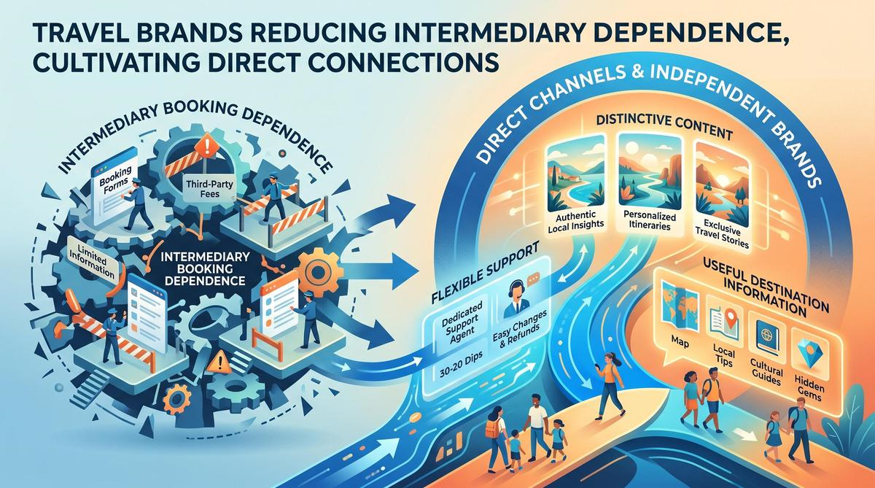
The modern travel booking ecosystem has consolidated around a handful of powerful intermediaries. Online travel agencies, metasearch platforms, and global distribution systems have positioned themselves as essential gatekeepers between travel brands and their customers. This intermediation imposes substantial costs, erodes brand relationships, and limits strategic flexibility. Artificial intelligence is creating new pathways for travel brands to reclaim direct connections with travelers.
The economic toll of intermediation is considerable. Commission rates on major booking platforms typically range from fifteen to twenty-five percent of transaction value, often consuming the majority of property profit margins. Beyond direct costs, intermediaries capture valuable customer data that prevents travel brands from building the direct relationships essential for loyalty, personalization, and repeat business.
AI-powered direct booking strategies offer a viable alternative. Machine learning models can optimize pricing dynamically based on demand patterns, competitive positioning, and customer segments without requiring platform intermediaries. Natural language processing enables conversational booking experiences that match the convenience of third-party sites. Recommendation engines personalize the discovery process, increasing conversion rates for direct channels.
Content marketing enhanced by AI drives organic discovery that bypasses paid intermediation. Intelligent content generation creates destination guides, travel inspiration, and property showcases that attract search traffic. AI-powered content distribution ensures this material reaches relevant audiences across channels, building awareness and consideration without per-click commission costs.
Predictive analytics transform how travel brands approach demand management. By analyzing search trends, booking patterns, economic indicators, and event calendars, AI systems forecast demand with increasing accuracy. This enables proactive pricing adjustments and targeted promotions that capture demand directly rather than waiting for intermediary referrals.
Personalization engines represent another direct booking enabler. When travelers interact with brand-owned channels, AI systems learn preferences, anticipate needs, and customize experiences in ways that build loyalty. The accumulated intelligence from direct interactions creates competitive advantages that improve with each customer touchpoint, unlike intermediary bookings where traveler data belongs to the platform.
Strategic marketing partnerships with specialized agencies can accelerate direct booking program development. Working with experienced partners like the professionals at https://aimarketingagencyeurope.com enables travel brands to implement sophisticated AI-driven strategies without building entire capabilities internally, reducing time-to-market for direct booking initiatives.
Email and CRM automation powered by AI maintain engagement throughout the customer lifecycle. Triggered communications based on browsing behavior, booking anniversaries, and travel preferences keep brands top-of-mind without intermediary involvement. Machine learning optimizes send times, content selection, and offer presentation to maximize engagement metrics.
Social media intelligence identifies opportunities for direct engagement. AI systems monitor social conversations about destinations, travel experiences, and brand mentions to identify prospects expressing intent. Proactive engagement with these high-intent travelers, guided by AI-generated insights, converts social activity into direct bookings without platform intermediation.
Voice and messaging channel development prepares brands for emerging booking modalities. Conversational AI that handles booking inquiries, answers property questions, and processes reservations through messaging interfaces creates frictionless direct booking pathways. As travelers increasingly adopt voice assistants and messaging for travel planning, brands with capable conversational AI gain direct access to demand.
Risk management balances direct booking investment against intermediary relationships. Sudden withdrawal from established channels can devastate occupancy during transition periods. Successful brands gradually shift mix toward direct bookings while maintaining strategic intermediary presence, using AI to optimize channel allocation based on demand conditions, customer segments, and lifetime value projections.
Key Takeaways: - Booking intermediaries extract substantial commissions and capture customer data that limits travel brand strategic flexibility - AI-powered pricing optimization, personalization, and content marketing enable profitable direct booking channels - Conversational AI and emerging messaging channels create new direct booking pathways independent of traditional platforms - Gradual channel mix optimization using AI guidance reduces risk while progressively building direct booking capability
Resources: - https://aimarketingagencyeurope.com